Rapid prototyping helps product teams get physical samples quickly for appearance and structural verification, with shorter lead times and lower risk compared with direct mold opening. Multiple manufacturing methods are available, and the right choice depends on your tolerance, material, quantity and schedule requirements.
3D printing is a popular additive rapid prototyping method. SLA resin printing delivers smooth surface finishes, ideal for cosmetic display prototypes. SLS selective laser sintering works with nylon and nylon-filled materials. It needs no support structures and offers good mechanical strength for complex functional testing, with typical tolerance from ±0.1 mm to ±0.2 mm. Small parts can be finished within hours, and regular samples are often ready within one or two days.
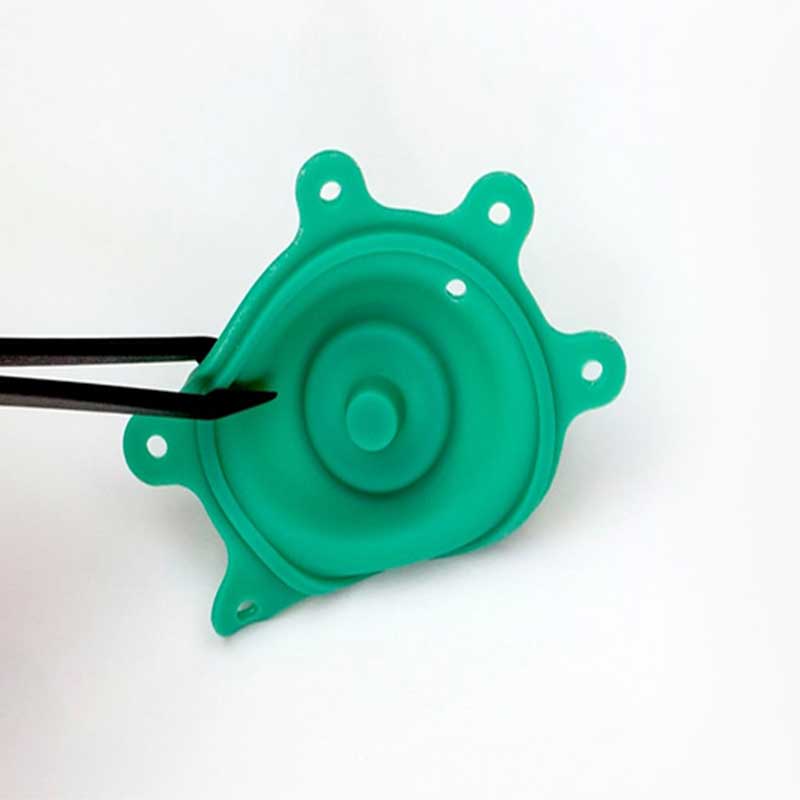
CNC machining is a subtractive process for high-performance prototypes. It can reach ±0.02~±0.05 mm tolerance, perfect for functional samples requiring high strength and premium surface quality. ABS plastic CNC prototypes usually take 1–2 days, while aluminum metal prototypes take 2–3 days.
Vacuum casting, also known as silicone molding, suits low-volume runs of 5 units or more. It takes roughly one week to make the master silicone mold, while each copied part only takes 1–2 days. It brings down unit cost greatly and fits pre-launch market testing and crowdfunding sample batches.
A wide range of materials are used for rapid prototyping. ABS is the most universal plastic. PC offers impact resistance and clear parts. PA nylon is wear-resistant and widely used for SLS printing. POM is selected for moving friction components. Common metal options include lightweight, heat-conductive aluminum and high-strength corrosion-resistant stainless steel.
To achieve fast turnaround, Prsom follows efficient production strategies. We start with DFM manufacturability analysis to catch design issues early and avoid rework during production. Our workshop runs equipment around the clock with parallel workflows. We also combine additive and subtractive manufacturing, using 3D printing for fast forming and CNC for precision finishing, balancing speed and accuracy.
The standard rapid prototyping workflow follows five clear stages. First, customers send STEP, IGS or STL 3D files together with surface finish requirements. Second, our engineers carry out DFM evaluation and normally send you a quotation within 30 minutes. Third, we program the files and run CNC or 3D printing equipment nonstop to form raw parts. Fourth comes post-processing: removing supports, sanding, spray painting, silk screening, anodizing and other surface treatments. Finally, every prototype goes through dimension and visual inspection before packed and shipped.
At Prsom, we provide fast rapid prototyping services covering SLA/SLS 3D printing, CNC prototype machining and vacuum casting. Our engineering team will recommend the best solution according to your drawing, tolerance, material and delivery schedule.
Send your 3D CAD files now for a free DFM check and quick quotation. View our prototype cases | Get Free Quote.
Prsite
请到「后台-用户-个人资料」中填写个人说明。